



In-process inspection: first, patrol and last piece
首检、巡检与末检
In plain words
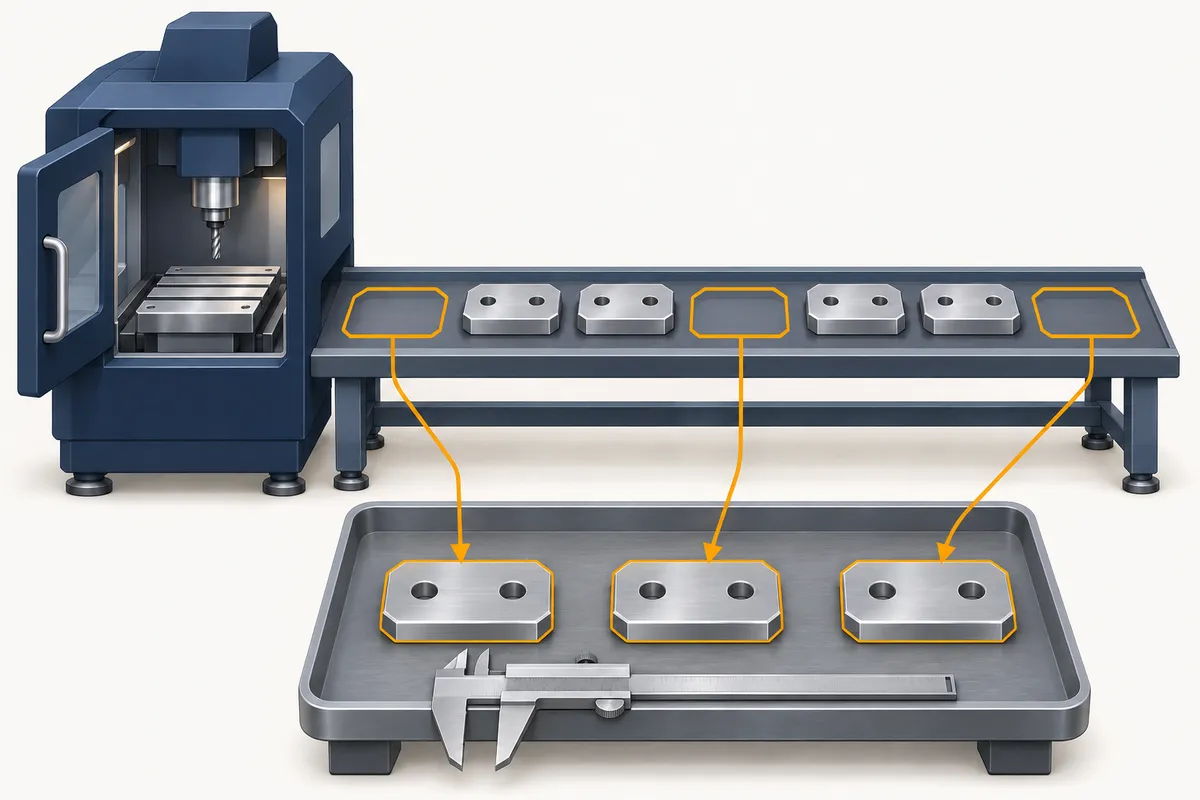
A shop does not wait until the end to find a mistake. The first part after setting up is checked before the rest are made, an inspector walks round and checks parts every so often, and the last part is checked too. If a check finds a bad part, everything made since the last good check is sorted, so the more often you check, the less you have to sort.
What it is
Between the formal first-article inspection (51) and final inspection, a shop checks its own work while the batch runs. After each setup the first piece is measured, by the operator and then usually by an inspector, before the run continues (首检). During the run an inspector walks the machines at a set interval, such as every hour or every so many parts, and checks the key features (巡检). The last piece is checked too (末件检验, 末检): it shows tool wear and tells the next run whether the program and fixture can be reused. Chinese factories call the division of work 三检制: operators check their own parts (自检), check each other's (互检), and dedicated inspectors check again (专检). Inspection is also split by stage: IQC for incoming material and outside-processed parts, IPQC during production, and FQC or OQC before shipping. When a patrol check finds a bad part, every part made since the last good check is sorted.
Why it matters for products
An MES records each check with time, person and result; the interval sets the inspection time per batch and how many parts are at risk when a process drifts.
Learn first
Making a part like this? Plan the process and estimate costs in Workspace.