



Shop safety
安全生产
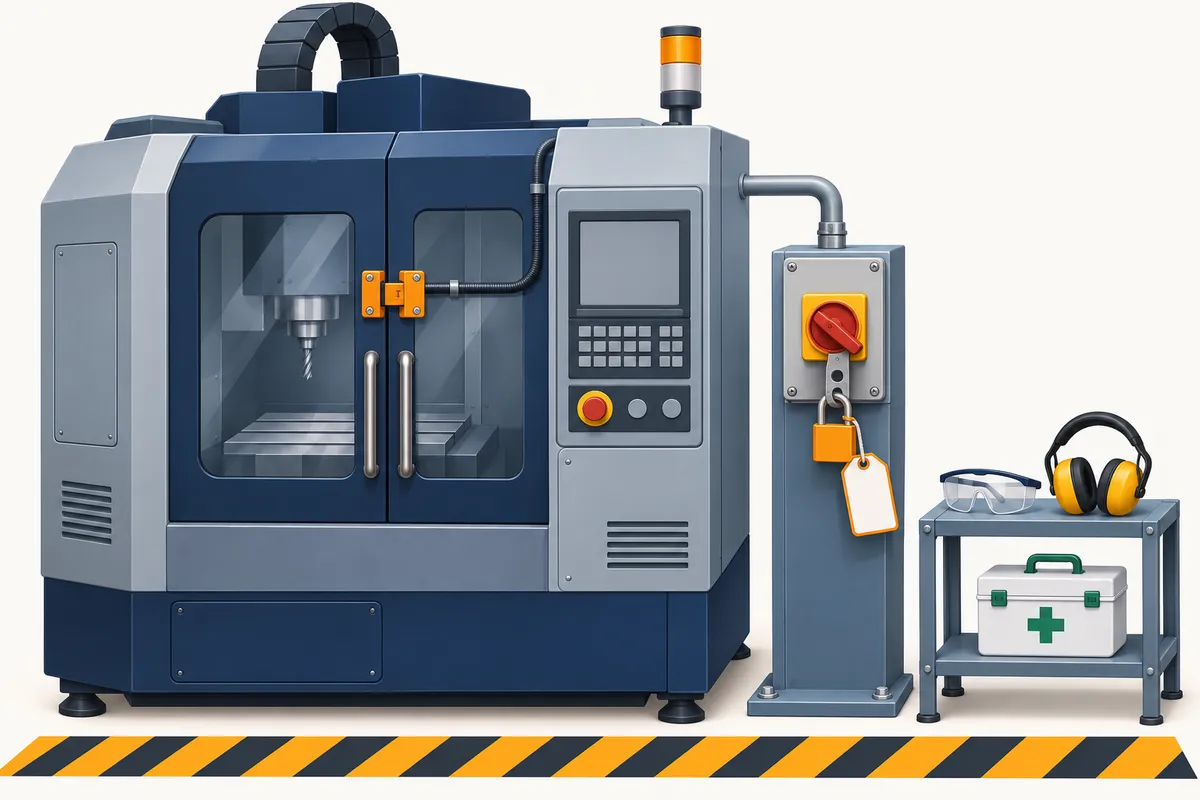
In plain words
Machines that cut steel can also cut people. Spinning parts catch loose sleeves, hair and gloves, chips fly into eyes and are razor sharp, and heavy parts crush fingers and toes. So workshops have firm rules: guards closed, safety glasses on, no gloves near anything spinning, chips cleared with a hook and never by hand, and machine doors with interlocks closed while running, and the power isolated and locked off before anyone reaches inside for maintenance.
What it is
Machine shops injure people in predictable ways: sleeves, hair, gloves and rags caught by spindles, chucks and turning bar; chips in eyes and cuts from sharp swarf; hands and feet crushed by vices, fixtures and heavy parts; skin problems from coolant and breathing its mist; fires in oil mist or in fine magnesium and titanium chips. The rules follow from that. Guards and door interlocks stay on and are never bypassed. Safety glasses are always worn, hearing protection where it is loud. No gloves, loose sleeves, jewellery or loose long hair near anything that rotates. Chips are cleared with hooks and brushes, never by hand or with compressed air, and a chuck key is never left in the chuck. Machines are isolated and locked out (上锁挂牌) before anyone reaches inside for maintenance; cranes and hoists lift heavy loads; every coolant and chemical has a safety data sheet. In China the Work Safety Law (安全生产法) makes employers train workers and keep training records.
Why it matters for products
Operator training records, machine permissions, safety checklists and incident logs belong in shop software, and customer and official audits ask for them.
Learn first
Making a part like this? Plan the process and estimate costs in Workspace.