



Grinding wheels, dressing and grinding burn
砂轮、修整与磨削烧伤
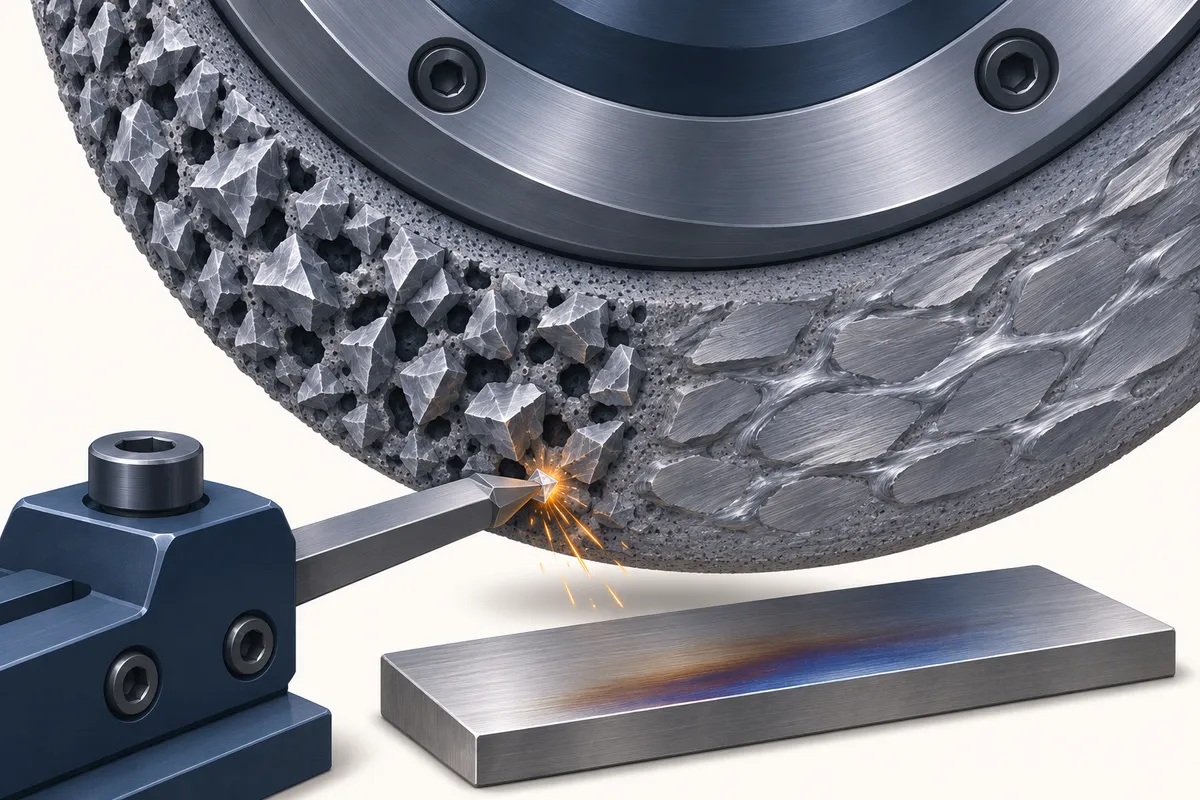
In plain words
A grinding wheel is millions of tiny sharp stones glued together. As they go blunt and clog with metal, a diamond scrapes the face to bare fresh sharp ones. Push a blunt wheel too hard and it scorches the steel, a hidden burn that weakens the part.
What it is
A wheel is abrasive grains held in a bond with pores between them. Aluminium oxide grinds most steels, silicon carbide cast iron and non-ferrous metals, and the superabrasives CBN and diamond grind hardened steel and carbide: CBN for hardened steel, diamond for carbide. The wheel's specification names the grain, the grit size (coarse to remove stock, fine to finish), the grade (how firmly the bond holds the grains), the structure and the bond. In use the grains go blunt and the pores clog with metal, so the wheel is dressed: a diamond tool skims its face to expose sharp grains and restore its shape. A blunt or too hard wheel, or too deep a pass, overheats the surface and burns it: temper colours, a softened or re-hardened skin, tensile stress and cracks that may not show without an etch test. Wheels are speed-rated, balanced and checked before mounting, because a burst wheel is dangerous.
Why it matters for products
Dressing time and wheel wear belong in grinding cost; burn is a hidden scrap risk on hardened parts that a quality plan checks for, and the wheel choice follows the material.
Learn first
Making a part like this? Plan the process and estimate costs in Workspace.