



Surface and profile grinding
平面磨与成形磨
In plain words
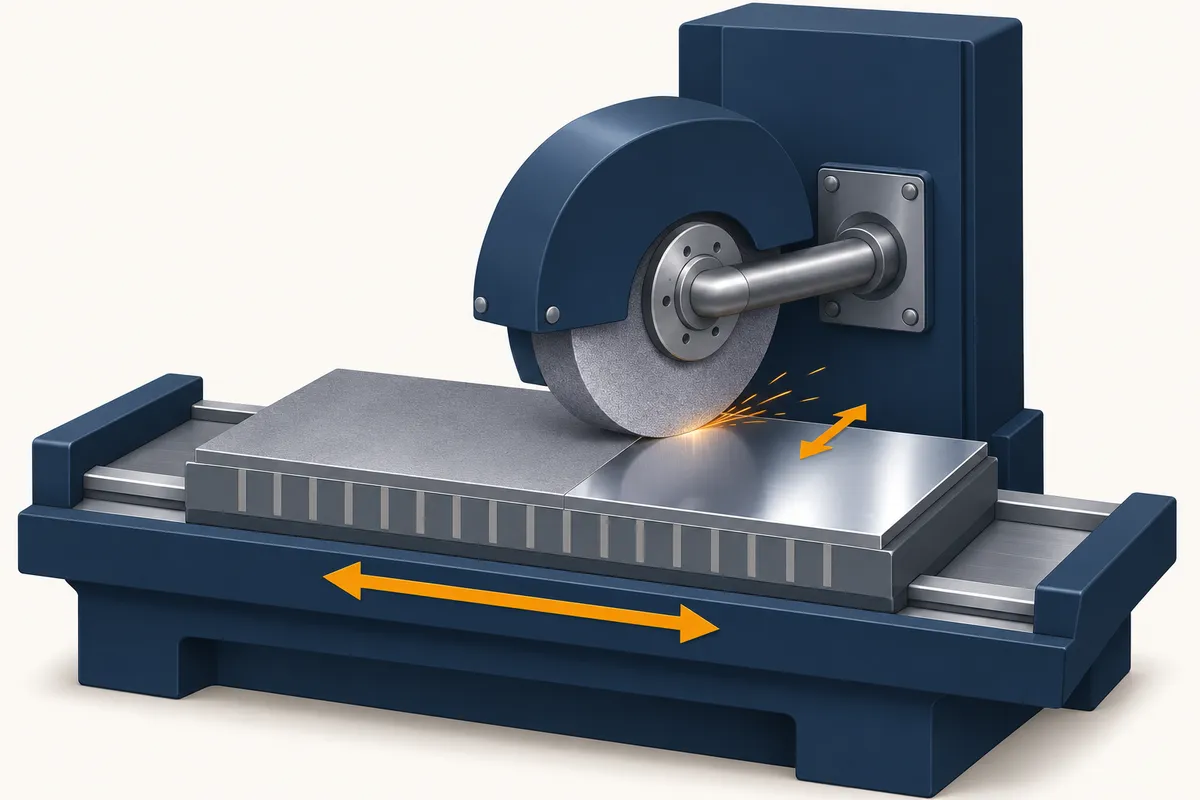
A flat part sits on a magnetic table and slides back and forth under a spinning stone wheel that takes off a sliver thinner than a hair on each pass. It makes faces flatter and more parallel than a cutter can, even on hardened steel.
What it is
Surface grinding moves a flat part, usually held on a magnetic chuck, back and forth under the wheel, stepping across and down a few micrometres at a time, to make faces flat, parallel and to thickness: mould plates, die plates, gauges, shims. Thin plates bow from grinding heat and released stress, so they are turned over and ground on both sides in turn. Non-magnetic parts need a vice or fixture. Profile grinding shapes the wheel to a form, or follows a magnified outline on an optical profile grinder (光学曲线磨), to grind punch and die profiles; jig grinding (坐标磨) grinds holes and contours at exact positions in hardened plates.
Why it matters for products
Flatness, parallelism and thickness tolerances of a few micrometres on hardened plates mean surface grinding on both faces, with time from the area and the stock to remove; die and mould work relies on profile and jig grinding, usually quoted by the hour.
Learn first
Making a part like this? Plan the process and estimate costs in Workspace.