



Forging
锻造
In plain words
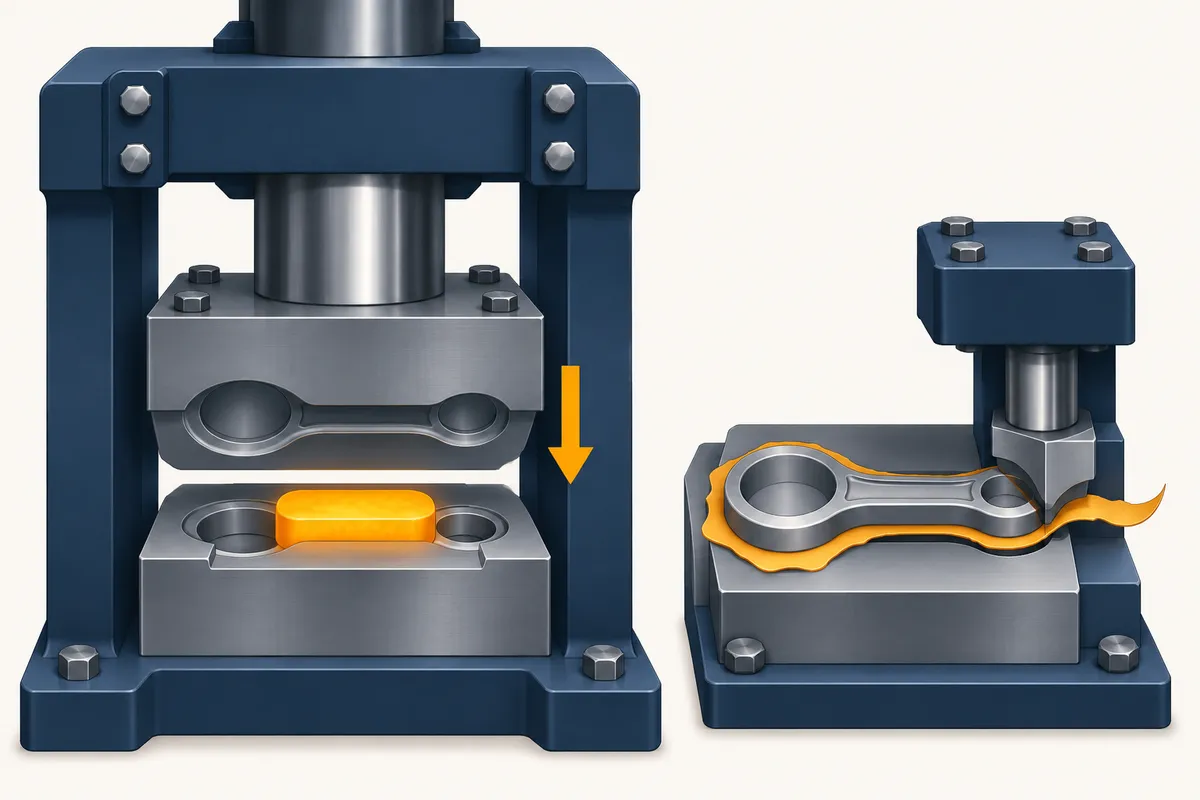
A blacksmith’s job done by machines: red-hot steel is hammered or pressed into shape. The metal’s grain bends with the shape instead of being cut through, like the grain in wood, which usually makes forged parts stronger where it matters. They are then machined where they must be exact.
What it is
Hot steel, at around 1100 to 1250 °C, is hammered or pressed into shape. The metal's grain flows along the shape instead of being cut across, so where the grain follows the shape a forged part carries load and resists fatigue better than one machined from bar: crankshafts, connecting rods, gear blanks, flanges, hand tools, aircraft fittings. Open-die forging shapes large shafts, rings and blocks between simple flat or curved tools. Closed-die forging presses the metal into an impression die, close to the final shape, and trims off the flash squeezed out at the joint. Cold forging and heading make bolts and small parts at high speed. Forgings come with scale, draft and machining allowance.
Why it matters for products
A strength or fatigue requirement on the drawing may call for a forged blank; die cost is spread over the volume, and the forging is a purchased item with its own price by weight and lead time, followed by machining.
Learn first
Making a part like this? Plan the process and estimate costs in Workspace.