



Additive manufacturing
增材制造 / 3D 打印
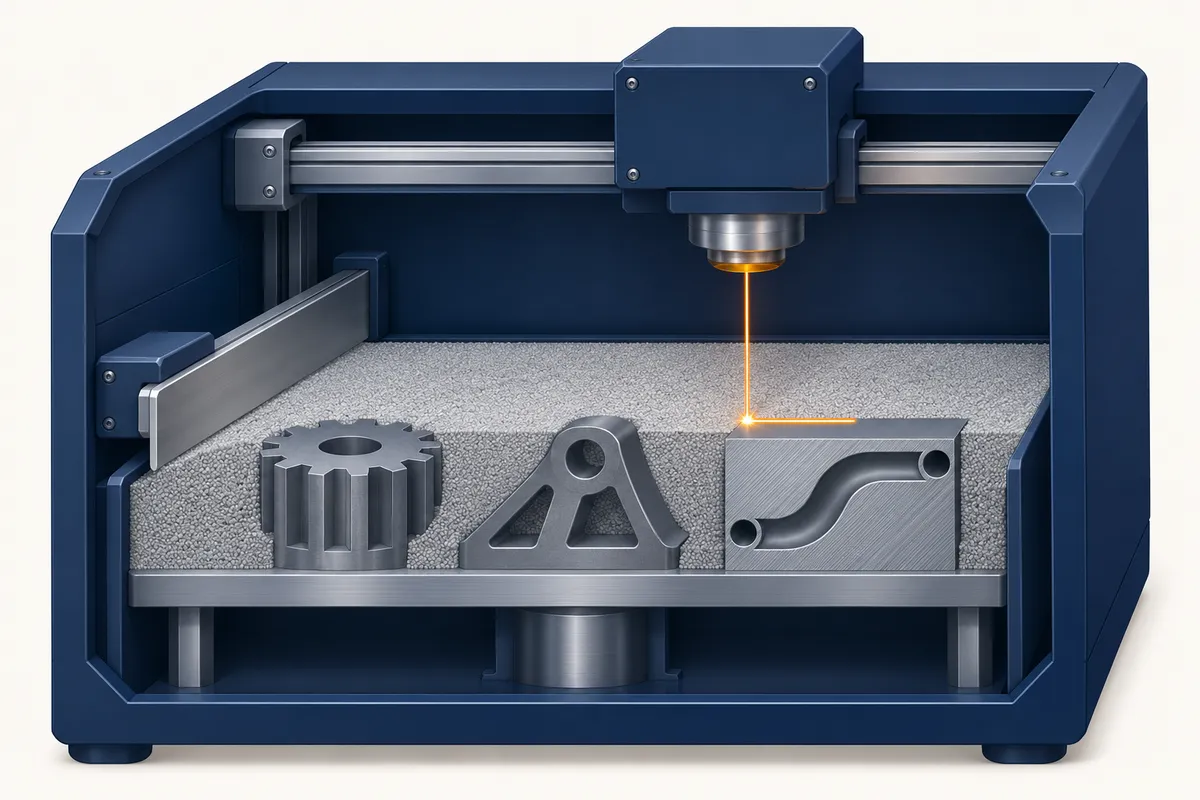
In plain words
Instead of carving a block down, the machine builds the part up one paper-thin layer at a time. It can make hollow channels and lattices no cutter could reach. Metal prints come out rough, so the important faces and threads are still finished on a CNC machine.
What it is
Parts are built layer by layer instead of cut from a block. Plastic printing (filament, resin and powder machines) makes prototypes, jigs, fixtures and soft jaws in hours. Metal powder-bed fusion melts fine powder with a laser, one layer of a few hundredths of a millimetre at a time, and can build internal cooling channels and lattices that no cutter could reach, in titanium, stainless steel, aluminium and nickel alloys. A metal print is stress-relieved, cut off its build plate (often by wire EDM or saw), freed of its supports, sometimes pressed hot in a gas vessel to close pores, and then machined: its surface is rough and its tolerance often only a tenth or two of a millimetre, so fits, sealing faces and threads are finished on a CNC machine. Cost follows build volume and height more than complexity.
Why it matters for products
A quote engine that can compare machining with printing, and that adds the finishing machining a print needs, earns trust; CNC shops also print their own fixtures.
Learn first
Opens the way to
Making a part like this? Plan the process and estimate costs in Workspace.