



Electroplating
电镀
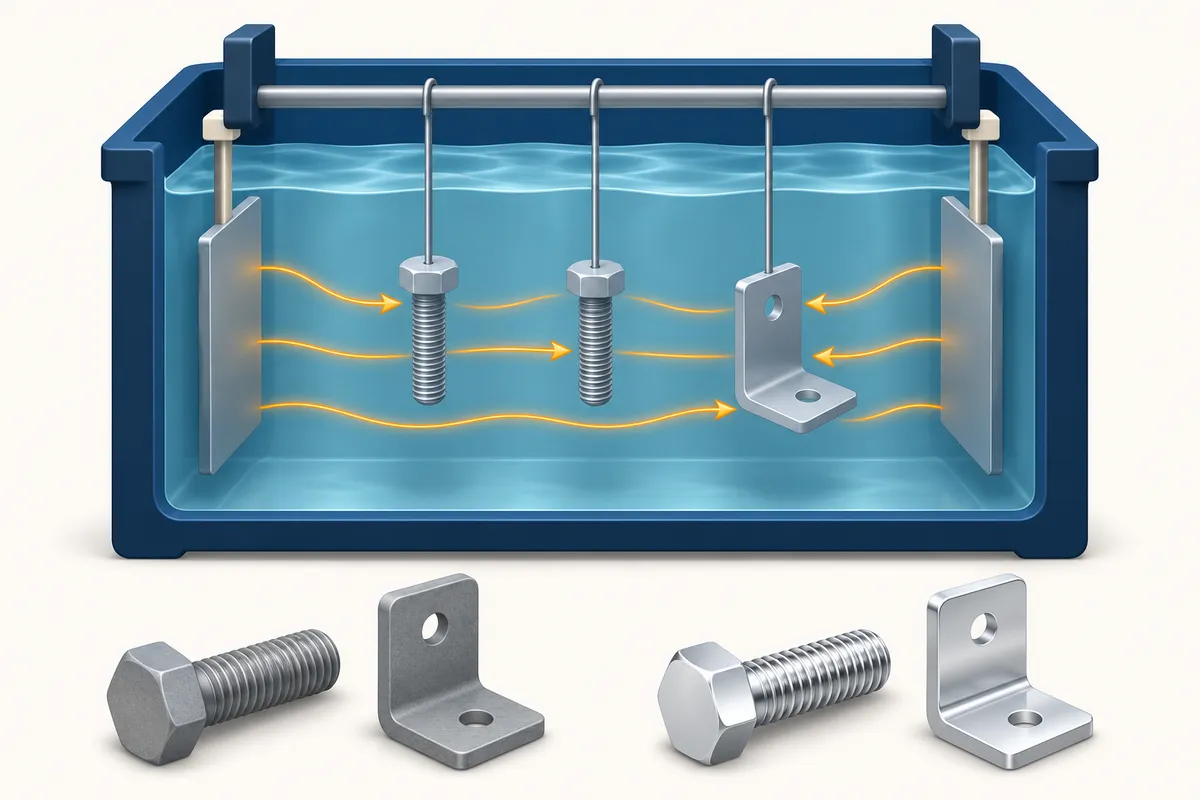
In plain words
A thin coat of another metal, such as zinc, nickel or chrome, is laid onto the part in a liquid bath by electric current, like the shiny coat on a tap. It stops rust or wear, but it adds thickness that the machined sizes must allow for.
What it is
A thin layer of another metal is deposited from a solution by electric current: zinc on steel against rust (followed by a coloured or clear passivation), nickel for wear and looks, hard chrome on rods and wear faces, copper, and silver or gold on electrical contacts. Electroless nickel (化学镍) needs no current and builds a much more even layer, also inside holes the bath reaches; ordinary plating builds up on edges and stays thin in holes and recesses. Thickness is a few to tens of micrometres. High-strength steel can turn brittle from hydrogen taken up in plating and is baked afterwards. Plating plants are heavily regulated and usually separate businesses.
Why it matters for products
Plating is priced by area, weight or batch with a minimum lot charge and its own lead time; its thickness eats into thread and fit tolerances, which the machining sizes must allow for.
Learn first
Opens the way to
Making a part like this? Plan the process and estimate costs in Workspace.