



Bench work and fitting
钳工
In plain words
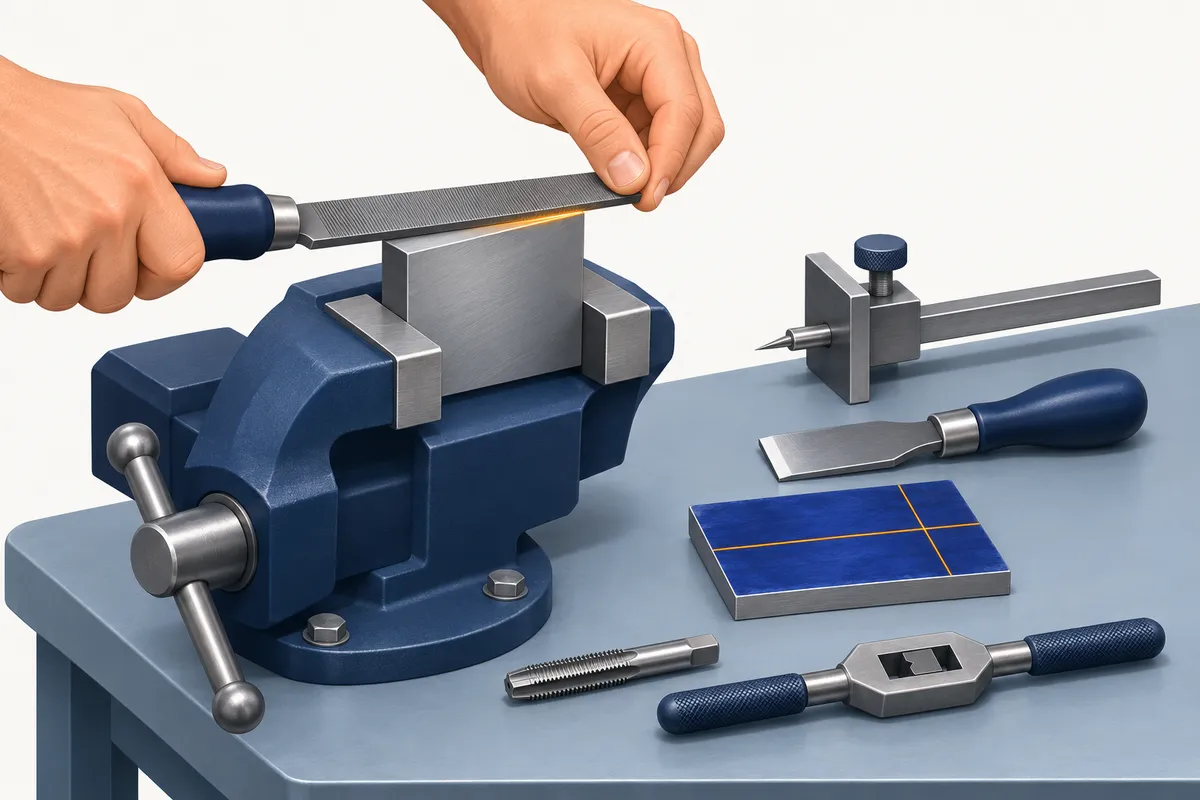
Plenty of work in a machine shop is still done by hand at a sturdy bench with a vice: drawing lines on metal to show where to cut, sawing, filing, cutting threads with a hand tool and scraping surfaces flat. A good fitter is part craftsperson, part problem solver, and makes parts fit together when machining alone cannot.
What it is
Hand work at the bench surrounds machining. Fitters mark out castings and blanks (划线): they coat them, scribe lines with a height gauge on a surface plate and centre-punch hole positions, so the machinist knows where to cut and how much metal is there. They saw, file and chisel, drill, ream and tap by hand, and sharpen drills. Scraping (刮削) takes the high spots off slideways and flat faces with a hand scraper, checked against a surface plate with marking blue and counted as contact spots per 25 mm square, and it is still how precise machine-tool slides are finished. Fitters also lap, deburr, fit mating parts and assemble (163). In China the trade has its own national skill standard with five levels, and tool and mould shops depend on skilled mould fitters.
Why it matters for products
Fitter labour, such as deburring and hand tapping, is a routine routing line in Chinese shops, and cycle-time models built from toolpaths miss it entirely.
Learn first
Opens the way to
Making a part like this? Plan the process and estimate costs in Workspace.