



Assembly methods and match machining
装配方法与配作
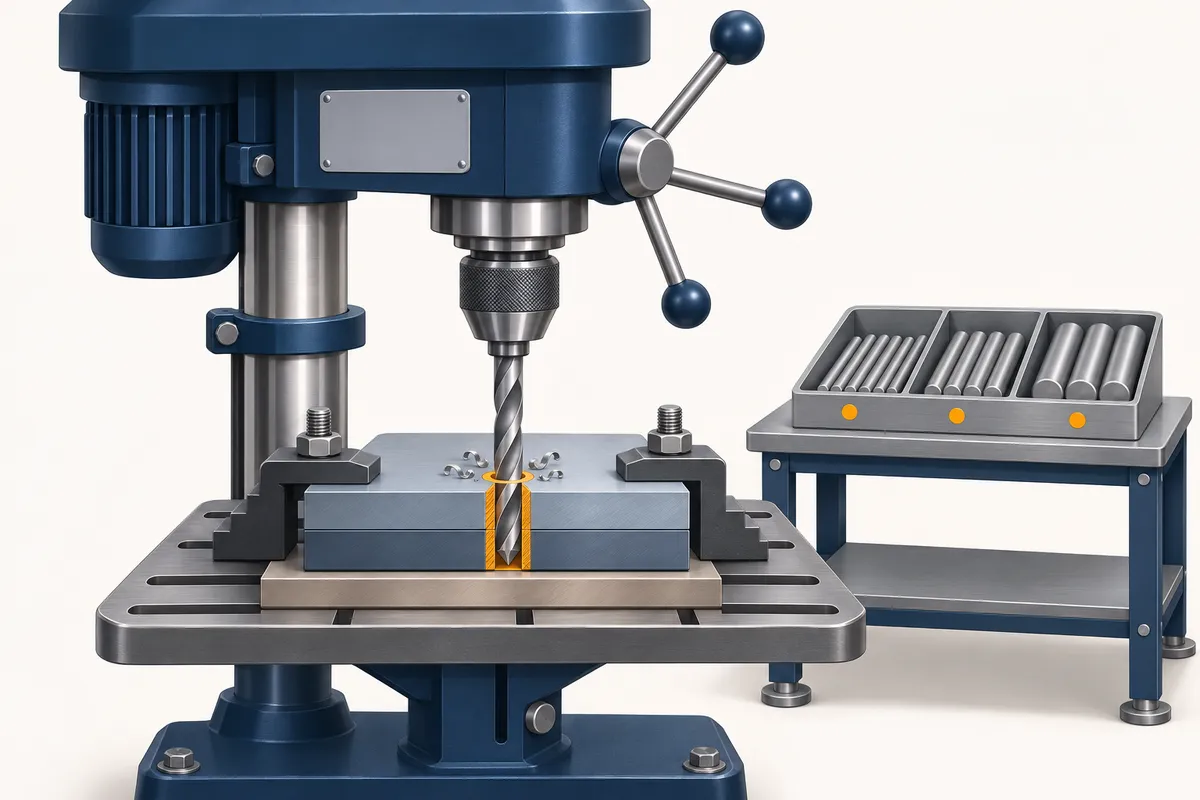
In plain words
There is more than one way to make parts fit together exactly. You can make every part so precisely that any one fits any other, measure and pair parts that happen to suit each other, like matching socks, or file one part by hand until it fits. Sometimes two parts are clamped together and drilled in one go, so the holes are sure to line up.
What it is
How an assembly reaches its required accuracy decides how tight each part must be. Chinese textbooks teach four methods. With full interchangeability any part fits any mate, so each tolerance in the chain (79) must be tight enough on its own: easy assembly, costly machining when the chain is tight. Selective assembly (选配) makes parts to looser tolerances, measures and sorts them into size groups, and pairs matching groups, as with pistons and their pins or bearing rings and balls. Fitting (修配) leaves one part oversize and files, scrapes or grinds it at assembly until it fits (176), which suits one-offs and machine tools. Adjustment (调整) takes up error with shims or adjusting screws. Match machining (配作) goes a step further: holes for dowel pins or bolts are drilled and reamed through two parts clamped together at assembly, so they line up exactly; a drawing note such as "销孔配作" means the single part is delivered without them.
Why it matters for products
The assembly method changes the tolerances a quote must hold and adds measuring, sorting or fitting labour; holes marked for match machining belong in the assembly routing, not the part's.
Learn first
Making a part like this? Plan the process and estimate costs in Workspace.