



Sinker EDM and electrodes
电火花成形与电极
In plain words
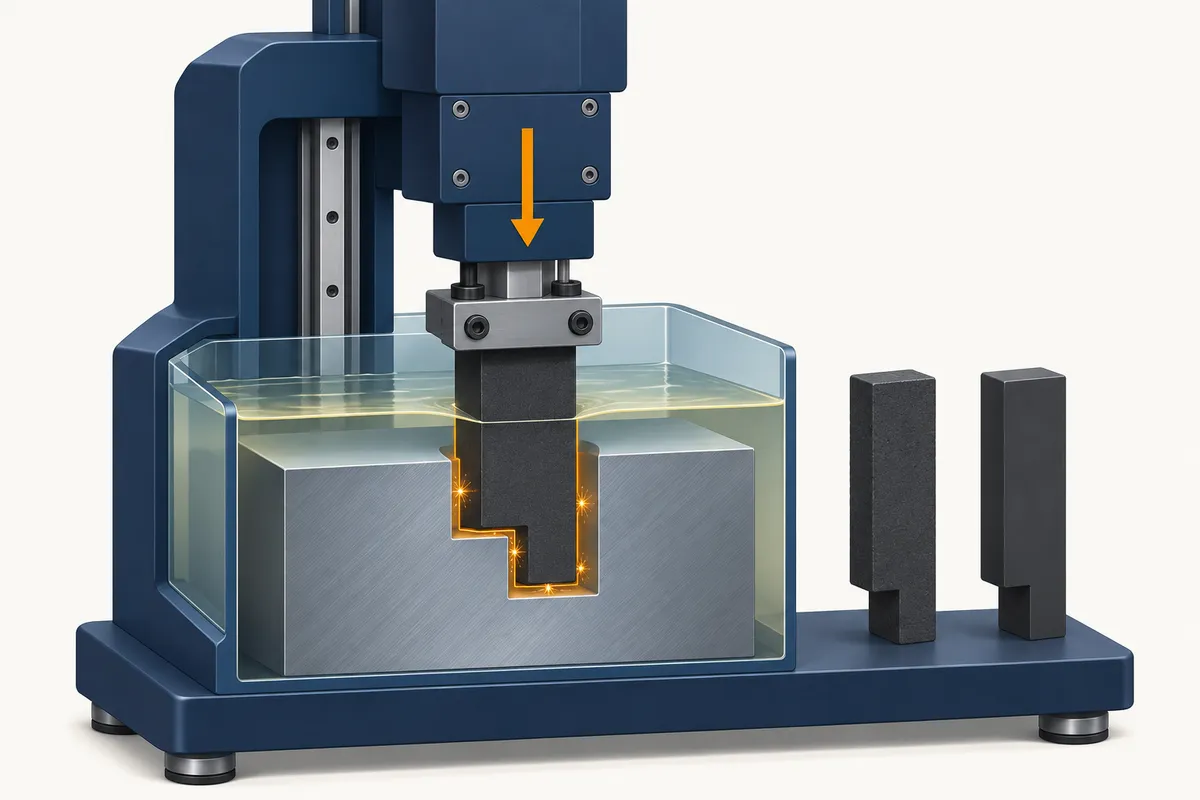
Like pressing a shaped stamp into clay, except the stamp is a block of copper or graphite and sparks do the pressing. It sinks slowly into hard steel and leaves a hollow of its own shape, with corners no spinning cutter could reach.
What it is
A shaped electrode, usually graphite or copper, is lowered slowly into the part under oil and sparks erode a cavity that is its negative: deep narrow ribs in plastic moulds, sharp corners at the bottom of blind pockets, fine textures, all in hardened steel. The electrode is made smaller than the cavity by the spark gap on every side, from a few hundredths of a millimetre for finishing to a few tenths for roughing, and it wears as it burns, so one feature often needs a roughing electrode and one or more finishing electrodes. The electrodes themselves are milled, measured and set up, and that work can cost as much as the burning. Spark energy sets both speed and finish; fine finishes are slow. The surface keeps a thin re-melted layer that fatigue-critical parts may need removed. Small-hole EDM drills holes from about 0.3 mm upwards with a tube electrode, for wire start holes and cooling holes.
Why it matters for products
Cost is electrode design and machining for each electrode plus burn time by volume and finish, so a mould quote has to count electrodes; pockets that no cutter can reach are the features to flag as EDM work.
Learn first
Making a part like this? Plan the process and estimate costs in Workspace.